Contents
Scroll to:
https://doi.org/10.17073/0368-0797-2026-2-155-161
Scroll to:
The article presents an innovative approach to processing man-made waste using bubbling technology. A general technological scheme of a complex employing hot air blast instead of oxygen-enriched air is described. The results of an example economic efficiency calculation demonstrate that the estimated investment payback period for constructing a plant based on a unit with bubbling molten slag (UBMS) with annual iron production capacity of 250,000 tons is approximately 1.5 years of operation. Photographs illustrate the design solutions implemented in a pilot industrial bubbling unit where expensive copper water-cooled panels were replaced with more efficient and cost-effective pipe panels. The article outlines the main technological and economic advantages achieved through the use of bubbling technology in the UBMS process, including the production of iron and ferromanganese at approximately half the cost compared to blast furnace and electric furnace methods, the production of commercial slag-based materials (fused cement clinker, crushed stone and stone products), the low-cost production of fused phosphates, as well as environmentally friendly and economically efficient recycling of all types of solid household waste (unsorted waste, sorting residues, and waste stored in old landfills). An example cost calculation for producing iron from low-grade ore using UBMS technology is presented confirming that the investment payback period is about 1.5 years. The article concludes by formulating the key advantages of bubbling technology as a promising solution for industrial waste processing and resource recovery.
Kovalev V.N., Leont’ev L.I. Effectiveness of bubbling technologies in processing technogenic raw materials. Izvestiya. Ferrous Metallurgy. 2026;69(2):183-189. https://doi.org/10.17073/0368-0797-2026-2-155-161
Problem statement
In Russia, as in other countries, technogenic waste from mining and processing industries has accumulated in quantities measured in millions and billions of tons. This waste includes overburden generated during ore and coal mining, as well as beneficiation and processing waste containing 20 – 50 % of recoverable element, such as carbon or iron. At the same time, the content of valuable elements in mined raw materials, for example iron in ores, is steadily decreasing. Rich ores are being depleted, and deposits with an iron content of about 20 % are increasingly being brought into development. Waste disposal sites have an adverse environmental impact. Therefore, the development of environmentally friendly and cost-effective technology and equipment for processing technogenic waste is an urgent task.
Proposed solution
In the authors’ opinion, the best solution to the problem of processing technogenic waste is the use of bubbling technology implemented in Vanyukov furnaces, ROMELT, and unit with bubbling molten slag (UBMS).
The Vanyukov furnace technology and the ROMELT process [1], developed by MISIS researchers, are based on intensive mixing of the main reactants in the liquid phase. This promotes heat and mass transfer and accelerates the reactions involved in producing target products, such as nickel, copper, iron, and others. As a result, productivity per 1 m2 of furnace area increases by several times compared with layered processes in shaft and bath furnaces. In non-ferrous metallurgy, Vanyukov furnaces, where the energy source is the autogenous combustion of sulfur, remain indispensable for nickel and copper production. In ferrous metallurgy, however, the large-scale implementation of this promising domestic technology has stalled. This is despite successful studies conducted by researchers from a specialized MISIS laboratory under the supervision of V.S. Valavin, Dr. Sci. (Eng.), which convincingly demonstrated that iron produced in the ROMELT unit at the Novolipetsk Metallurgical Plant had a 30 % lower production cost than blast-furnace iron. These findings were based on more than 40,000 tons of hot metal smelted in batch mode. The main reason is the absence of an operating low-cost iron production facility in ferrous metallurgy based on the ROMELT bubbling technology. For non-technical reasons, the commissioning of the ROMELT-based plant in Myanmar has also been suspended.
Recognizing the potential and prospects of bubbling technology, researchers and specialists from several organizations, including MISIS, LLC RPE “Energoterm-System”, Steelproject Institute LLC, and others, continue to improve technical solutions for equipment used in the complex with a bubbling melt and to expand the range of technological tasks addressed, despite severe funding constraints or, more precisely, the absence of funding. For example, in 2018, Energotherm-System Research and Production Enterprise LLC developed and manufactured a UBMS with annual iron production capacity of 15,000 tons according to the technological assignment prepared by G.S. Podgorodetskii, Head of the Chair.
Instead of the expensive water-cooled copper panels used in Vanyukov furnaces and ROMELT units, steel pipe panels were developed. These panels proved highly effective in skull formation and were less expensive. New tuyere designs and an automated cooling control system for 49 panels were also developed. Iron smelting campaigns demonstrated the effectiveness of several technical solutions implemented in the UBMS. However, for non-technical reasons, including the death of G.S. Podgorodetskii, the work was discontinued.
Sample calculation of process parameters for the UBMS
For example, for a case in which the iron content in the iron-bearing component of the charge is 28 %, calculations performed using the developed mathematical models show that the production of 1 ton of iron in the UBMS requires 2.51 tons of ore, 0.8 tons of coal carbon, and 7.47 tons of air heated to 1000 K, without oxygen enrichment. The calculation also showed that the production cost of iron produced in the UBMS is approximately half that of blast-furnace iron.
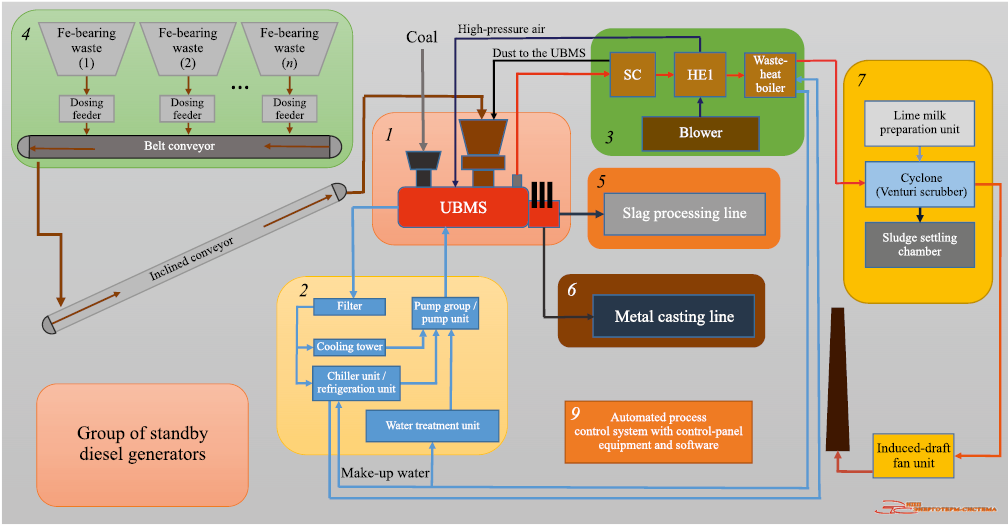
The energy balance shows that the energy content of the hot gases leaving the UBMS is 19.38 MJ, which accounts for 65 % of the energy balance. A total of 7.61 MJ/kg Fe is corresponds to 25.37 % of the energy balance and 39.27 % of heat content of the flue gases from the UBMS (Fig. 1). The remaining energy in the flue gases, amounting to 11.77 MJ/kg Fe, can be used for drying raw materials and heating premises.
Fig. 1. Technological scheme for processing iron-containing waste in UBMS |
Relevance and effectiveness of the proposed solution
The relevance of bubbling technology is also determined by the following factors:
– global reserves of rich iron ores are being depleted, and low-grade ores with an iron content starting from 20 % are being brought into development. This makes the processing of technogenic raw materials containing 40 – 50 % iron particularly relevant;
– the Urals contain hundreds of millions of tons of oxidized nickel ores that are not processed in Vanyukov furnaces. These ores can be processed economically in the UBMS, especially taking into account the possibility of producing construction materials from liquid slag;
– more than 8 billion tons of waste are generated annually in Russia, of which 20 to 67 % are used or neutralized. The total amount of accumulated waste in Russia is estimated at 100 billion tons [2; 3].
For twenty years, LLC RPE “Energoterm-System” has been working both on the development of process regulations for processing several types of technogenic raw materials in a bubbling melt and on the development of UBMS design solutions aimed at improving their efficiency [4 – 8]:
– replacement of blast containing 40 – 80 % oxygen with hot air blast at a temperature of 700 – 900 °C by heating air with hot gases leaving the UBMS at 1400 – 1600 °C in a specially designed heat exchanger made of heat-resistant tubes;
– tapping of metal and slag through a siphon with three electrodes. By changing their immersion depth in the slag, it is possible to maintain both the metal temperature and the slag temperature at the required level. The slag is then processed into commercial products, including fused cement clinker, crushed stone, and cast stone products;
– arrangement of charge feeding into the UBMS working space to shield the panels and allow the charge to absorb part of the heat from the outgoing gases.
In addition to the development of design solutions, process calculations were also performed for:
– processing iron-bearing slags and sludges into profitable iron and slag products;
– processing ash and slag waste;
– producing fused cement clinker;
– producing ferromanganese at half the production cost compared with production in submerged-arc electric furnaces;
– joint processing of lignin waste from the Baikal Pulp and Paper Mill and nearby ash and slag waste;
– processing coal mine waste heaps and coal beneficiation sludges with a carbon content of about 50 %.
An example assessment of the efficiency of processing iron-bearing slag with an iron content of 20 % in the UBMS is given below.
The main cost items for producing 1 ton of iron are as follows, rubles per ton: 6 tons of slag – 600; 1 ton of coal – 5000; payroll for the main workers, assuming a monthly salary of 150,000 rubles, UBMS iron productivity of 21,000 tons/month, 100 employees in the UBMS shop, and a minimum iron price of 20,000 rubles/ton – 100·150,000/21,000 = 715; coal, at a price of 5000 rubles/ton and a consumption rate of 1 ton of coal per 1 ton of iron – 5000; electricity for drives and lighting, at a price of 7 rubles/kWh and a consumption rate of 270 kWh/t Fe – 1890; and overhead costs, taken as 100 % of payroll – 715. The total production cost of 1 ton of iron is therefore 8920 rubles. If the iron is sold even as high-quality scrap at 20,000 rubles/ton, the income, or profit before income tax, per ton is 20,000 – 8920 = 11,080 rubles, and annual profit is 250,000·11,080 = 2.77·109 rubles, or 2.77 billion rubles. In addition, high-quality fused cement clinker obtained as a by-product, with almost all costs allocated to iron, at an output of 1.25 million tons/year and a selling price of at least 3000 rubles/ton, will generate income of 1.25·3000 = 3750 million rubles, or 3.75 billion rubles. Thus, the payback period for an investment estimated at approximately 5 billion rubles will be about 1.5 years of plant operation.
When bubbling technology is used in the UBMS, all types of solid household waste, including unsorted waste, sorting residues, and waste stored in old landfills, can be processed in an environmentally friendly and cost-effective manner.
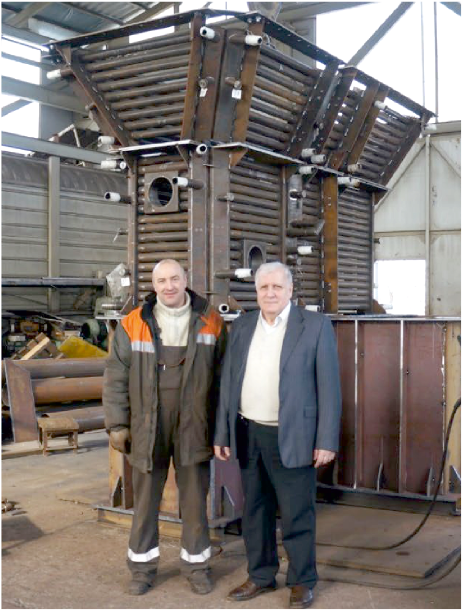
Fig. 2. Design of the UBMS lower part (Energoterm-System Plant, Istra).
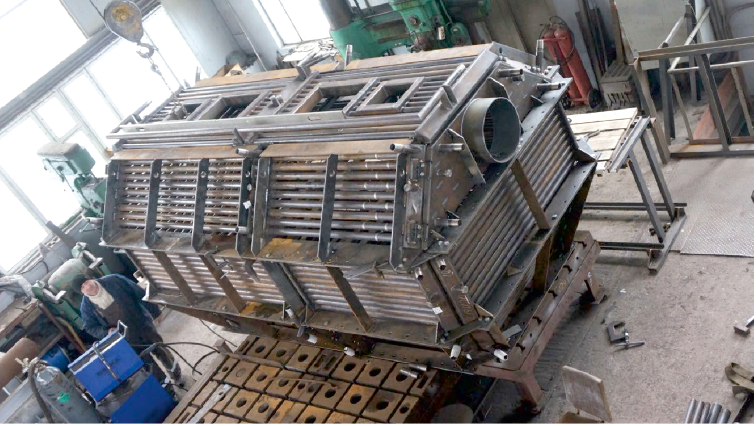
Fig. 3. Design of the UBMS upper part (Energoterm-System plant, Istra) |
Figs. 2 and 3 show the lower and upper parts of the UBMS during fabrication at the Energotherm-System plant in Istra. Instead of expensive water-cooled copper panels, water-cooled pipe panels were developed and manufactured. These panels are more effective in skull formation. Iron tapping from the UBMS is shown in Fig. 4.
Fig. 4. Iron tapping from UBMS |
An analysis of electric arc furnace use for processing iron-bearing waste in briquetted form [9], together with a review of thermal and chemical technologies for neutralizing various types of waste [10 – 13], shows that these processing routes are costly and have relatively low productivity. The annual increase in technogenic waste adds to the environmental burden and makes the processing of technogenic waste [14 – 17] and the implementation of innovative domestic bubbling technology increasingly relevant.
The main advantages of domestic bubbling technology are as follows:
– the use of inexpensive local coals as energy carriers instead of costly coke, with hydrocarbons contained in the waste also participating in the process;
–high process productivity and efficiency due to intensified heat and mass transfer in the bubbling molten slag;
– no need for preliminary charge preparation, such as pelletizing or sintering;
– waste-free operation through the return of waste and dust from the gas-cleaning system to the UBMS;
– high process profitability and low production cost due to low cost of the energy carriers used and the production of highly profitable slag-based products, including crushed stone for construction and cast stone products (Fig. 5).
Fig. 5. Samples of the products made from natural basalt |
Conclusions
An efficient bubbling technology supported by extensive practical experience were developed in Russia. A strong foundation was created for the large-scale implementation of this technology in various industries. This technology offers broad opportunities both for producing many types of marketable products, including iron, ferromanganese, fused cement clinker, fused phosphates, cast stone products, and others, at a substantially reduced production cost, by a factor of 2 – 3 for a number of products, and for the cost-effective and environmentally friendly processing of technogenic and household waste.
1. ROMELT Process. Roments V.A. ed. Moscow: Ruda i Metally; 2005:400. (In Russ.).
2. Smirnov L.A., Leontyev L.I., Smirnov Yu.V. Processing and utilization of technogenic waste from metallurgical production. In: Proceedings of the Int. Congress “Fundamental Principles of Processing and Utilization Technologies for Technogenic Waste”. Yekaterinburg: UIPTs; 2012:552. (In Russ.).
3. Volynkina E.P. Analysis of the state and problems of technogenic waste processing in Russia. Bulletin of the Siberian State Industrial University. 2017;(2(20)):43–49. (In Russ.).
4. Kovalev V.N. Metallurgical complex for producing marketable products from technogenic and natural materials. Stal’. 2013;(4):78–82. (In Russ.).
5. Kovalev V.N. Efficient metallurgical microplants as a mechanism for intensive economic development of the Far East and Siberia. In: Proceedings of the Int. Conf. with Elements of a Youth Scientific School “New Trends in Rational Environmental Management. Secondary Resources and Environmental Issues”. Vol. 1. Vladivostok: FESU; 2010:64–67. (In Russ.).
6. Kovalev V.N. Technological complex for the efficient processing of iron-containing waste from metallurgical plants. MetalRussia. October 2010:26–28. (In Russ.).
7. Kovalev V.N. The “Energoterm – Liquid Bath Smelting – Cyclone” metallurgical complex for producing iron-containing marketable products from technogenic and natural materials. In: Proceedings of the XII Congress of Steelmakers. Moscow: Metallurgizdat; 2012;21–25. (In Russ.).
8. Kovalev V.N. Efficiency of pig iron production in a furnace with bubbling molten slag. In: Proceedings of the XIII Congress of Steelmakers. Moscow; Polevskoi; 2014:415–418. (In Russ.).
9. Dorofeev G.A., Afonin S.M., Shevelev L.N. Energy-Technological Features of Using Synticome in Steelmaking in Electric Arc Furnaces. Tula: TSU; 2013:112. (In Russ.).
10. Maksimov I.E. Status and prospects for the use of eco-protective systems in solving waste problems. In: Municipal and Industrial Waste: Methods of Neutralization and Recycling – Analytical Reviews. Ecology Series. Novosibirsk; 1995: 6–36. (In Russ.).
11. Stolnikova E.M., Koldin M.S. Problems of industrial safety in processing productions. Nauka i Obrazovanie. 2021;4(2):63. (In Russ.).
12. Dmitriev V.I., Korshunov N.N., Solov’ev N.I. Thermal neutralization of waste from chlorinated organic production. Chemical Technology. 2016;(5):58–60. (In Russ.).
13. Bernardiner M.N., Shurygin A.P. Fire Treatment and Neutralization of Industrial Waste. Moscow: Khimiya; 2016:304. (In Russ.).
14. Leont’ev L.I., Marshuk L.A., Ponomarev V.I. Contribution of science and industry to implementation of the federal project “Circular economy”. In: Fundamental Research and Applied Developments of Processes for Processing and Utilization of Technogenic Formations: Proceedings of the VI Congress with Int. Participation “TECHNOGEN 2023”. Yekaterinburg: UB RAS; 2023:16–26. (In Russ.). https://doi.irg/10.34923/technogen-ural.2023.82.57.002
15. Klimentenok G.N., Khairullin R.T., Klimentenok G.G. Comprehensive processing of complex technogenic raw materials to obtain highly marketable products (on the example of Ural industrial waste). In: Fundamental Research and Applied Developments of Processes for Processing and Utilization of Technogenic Formations: Proceedings of the VI Congress with Int. Participation “TECHNOGEN 2023”. Yekaterinburg: UB RAS; 2023:26–33. (In Russ.). https://doi.org/10.34923/technogen-ural.2023.88.62.003
16. Startseva O.P. Recycling of industrial waste as a key component of circular economy. In: Fundamental Research and Applied Developments of Processes for Processing and Utilization of Technogenic Formations: Proceedings of the VI Congress with Int. Participation “TECHNOGEN 2023”. Yekaterinburg: UB RAS; 2023:45–53. (In Russ.). https://doi.org/10.34923/technogen-ural.2023.17.39.007
17. Zolotova E.S., Kotel’nikova A.L., Ryabinin V.F. Assessment of element migration from flotation waste of copper smelting slags into soil and plants. In: Fundamental Research and Applied Developments of Processes for Processing and Utilization of Technogenic Formations: Proceedings of the VI Congress with Int. Participation “TECHNOGEN 2023”. Yekaterinburg: UB RAS; 2023:210–211. (In Russ.). https://doi.org/10.34923/technogen-ural.2023.84.18.068
Viktor N. Kovalev, Cand. Sci. (Eng.), General Director
51-A Panfilova Str., Istra, Moscow Region 143432, Russian Federation
Leopol’d I. Leont’ev, Academician, Adviser, Russian Academy of Sciences; Dr. Sci. (Eng.), Prof., National University of Science and Technology “MISIS”; Chief Researcher, Vatolin Institute of Metallurgy of the Ural Branch of the Russian Academy of Sciences
101 Amundsena Str., Yekaterinburg 620016, Russian Federation
4 Leninskii Ave., Moscow 119049, Russian Federation
32a Leninskii Ave., Moscow 119991, Russian Federation
Kovalev V.N., Leont’ev L.I. Effectiveness of bubbling technologies in processing technogenic raw materials. Izvestiya. Ferrous Metallurgy. 2026;69(2):183-189. https://doi.org/10.17073/0368-0797-2026-2-155-161
 Email this article (Login required)
Email the author (Login required)
Email this article (Login required)
Email the author (Login required) Publishing House of National University of Science and Technology "MISIS"
4, Leninskii prospekt, Moscow, 119991, Russia
Phone: +7 (495) 638-44-11, +7 (495) 784-58-66
E-mail: fermet.misis@mail.ru