Contents
Scroll to:
https://doi.org/10.17073/0368-0797-2026-1-51-58
Scroll to:
The study provides a detailed analysis of the effects of high-speed cooling methods and the use of rapidly cooled charge materials (ferroalloys, modifiers, alloying additives) on the microstructure and performance properties of ferrous metallurgy alloys, with a particular focus on ductile iron (nodular cast iron). Experimental results demonstrate that precise control of cooling rates within the range of 105 – 106 K/s enables the targeted formation of fine-grained and homogeneous structures with enhanced strength, impact toughness, and wear resistance. It was established that the use of rapidly cooled master alloys, such as Cu – Mg, not only increases magnesium recovery to 50 – 60 % but also significantly improves modification kinetics: the duration of the exothermic reaction is reduced by 1.5 – 2.0 times, while the formation of nodular graphite becomes more stable and reproducible. The highest efficiency is achieved at cooling rates of 800 – 1650 °C/min, which promotes phase refinement, reduces segregation, and increases tensile strength by 15 – 20 % compared to conventional methods. Special attention is given to ferroaluminum modifiers (25 – 33 % Al), for which the possibility of controlling the size and distribution of structural components solely by adjusting the cooling rate – without subsequent heat treatment – was confirmed. This opens the prospects for energy-efficient technologies. The study demonstrates that rapidly cooled materials not only enhance mechanical properties but also offer technological advantages: reduced consumption of alloying elements, improved process repeatability, and environmental benefits due to lower emissions. The results hold significant practical potential for developing new generations of alloys with tailored properties, combining high performance, resource efficiency, and compliance with environmental standards. Thus, the application of high-speed cooling techniques and rapidly cooled charge materials represents a promising direction in modern metallurgy, enabling optimization of both structural and process parameters in production.
Lobanov D.A., Sheshukov O.Yu., Yablokov P.S. Modern trends in application of rapidly cooled charge materials for modifying cast iron. Izvestiya. Ferrous Metallurgy. 2026;69(1):51-58. https://doi.org/10.17073/0368-0797-2026-1-51-58
A substantial potential for improving the service and technological properties of ferrous metallurgy alloys lies in effective control of their microstructure and physical and mechanical properties. These objectives can be achieved through the scientifically justified selection and introduction of special charge components into the metallic melt, including:
– ferroalloys of various compositions;
– complex modifiers;
– selective alloying additions;
– other functional additives.
This integrated approach enables purposeful control over crystallization processes and the formation of the final alloy structure, ultimately resulting in materials with a predefined level of strength, wear resistance, and other critically important service characteristics.
Accordingly, the introduction of finely dispersed charge materials into alloys for modification or alloying purposes represents a promising method for controlling metal structure and properties. This approach promotes significant refinement of structural constituents (pearlite, ferrite, cementite, etc.) during crystallization, increases the metallic matrix homogeneity, and improves the overall set of mechanical and service properties of finished castings. A key role in this process is played by high-temperature nucleation complexes present in the charge. These include refractory carbide phases, thermally stable oxide compounds, as well as intermetallic formations and other heterogeneous inclusions. Acting as active crystallization centers within the melt volume, such high-temperature nucleation complexes may also initiate the formation of new phases on the surfaces of existing substrates. As a result, the number of grains in the metal structure increases significantly, leading to natural grain refinement and, consequently, to enhanced strength and service properties of the final product.
The aim of this study is to provide a comprehensive analysis of the effects of modern rapid cooling methods applied either to the melt itself or to the charge materials added to the melt, on the final product composition. Of particular interest is rapid cooling of ferrous metal melts, as well as the introduction of rapidly cooled charge components (including ferroalloys and modifying additives), and their influence on the final chemical composition and structural characteristics of the resulting casting products (cast iron and steel).
The relevance of this work is confirmed by studies conducted by leading research groups. In particular, a research team led by S.G. Menshikova [1 – 3] demonstrated that melt cooling rates of approximately 1000 °C/s result in high material density without pores or shrinkage defects, excellent structural homogeneity, and the formation of a fine-grained crystalline structure [3 – 5]. In addition, the obtained samples exhibit improved strength characteristics, enhanced service properties, and uniform properties throughout the product [5 – 7]. These effects appear to be universal and are observed during the processing of a wide range of alloy systems, indicating significant potential for industrial implementation of this technology.
In addition to the work of Menshikova’s group, the influence of cooling rate on melt quality has been examined by a research team led by V.I. Gladkov, with particular emphasis on ultrarapid quenching. Their studies describe ultrarapid quenching from the melt as an advanced materials processing technique capable of inducing profound changes in the structure and properties of metallic alloys. At extremely high cooling rates, this approach enables the formation of unique structural and phase states that cannot be achieved under conventional crystallization conditions [8].
The application of ultrarapid quenching enables several key microstructural and phase transformations:
– significant refinement of structural constituents, including the formation of submicron and nanoscale structures, resulting in a marked improvement in mechanical properties;
– expansion of component solubility limits, leading to the formation of supersaturated solid solutions with unusually high concentrations of alloying elements;
– stabilization of metastable phases through the retention of intermediate states that are unstable under equilibrium conditions and rapidly decompose.
Under these conditions, cooling rates reach 105 – 106 K/s or higher, suppressing diffusion processes characteristic of equilibrium crystallization. This promotes the formation of nonequilibrium structures with unique properties and enables the production of amorphous and microcrystalline states [8; 9].
The authors emphasize that ultrarapid quenching provides new opportunities for the development of materials with tailored properties for hydrogen energy systems, aviation and rocket engineering, microelectronics, and other high-technology sectors [9]. Accordingly, this method represents a powerful tool for designing innovative metallic materials with unique service characteristics.
The service properties of alloy products are largely governed by two key factors [10]:
– composition and properties of the metallic matrix;
– morphological characteristics of nonmetallic inclusions, including their size distribution, shape, and spatial arrangement.
An effective approach to controlling these parameters is the phenomenon of structural heredity [11; 12], which involves the transfer of structural features of charge materials through the liquid phase into final ingots and castings.
In the study by V.I. Nikitin [12], an important relationship was established between the effectiveness of hereditary modification (alloying) and the degree of phase dispersion in the master alloy. Specifically, finer structural constituents in the initial charge and a more homogeneous phase distribution result in a more pronounced manifestation of structural heredity. This finding highlights the possibility of purposeful alloy structure design at the stage of charge material preparation, ultimately enabling the production of components with predefined service characteristics.
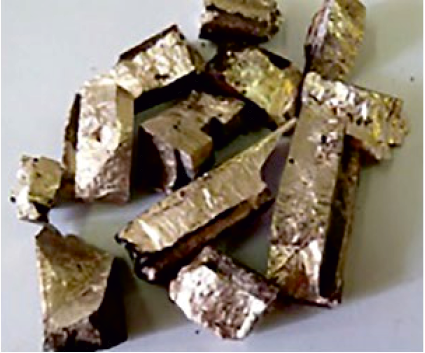
The properties of cast iron produced with the addition of rapidly cooled master alloys were investigated in detail by A.G. Slutsky and A.S. Kalichenko [13 – 15]. They demonstrated that the graphite morphology in cast iron depends on the amount of introduced Cu – Mg master alloy, transitioning from vermicular graphite at an addition level of 0.5 % to fully nodular graphite at 1.2 %. The rapidly cooled master alloy was produced by melting in a graphite crucible using a high-speed induction furnace. After complete melting of the calculated amount of copper, the melt was deoxidized with aluminum to remove dissolved oxygen. A sodium silicofluoride-based flux was then applied to the melt surface to form a protective layer. Subsequently, a specified amount of cerium in the form of MC60 master alloy was introduced, followed by the rapid addition of crushed magnesium alloy ML5. This processing sequence minimized magnesium losses due to oxidation, maximized the recovery of active components, and ensured uniform distribution of alloying elements. The resulting master alloy melt was poured into pre-cooled metal molds, providing rapid solidification and resulting in a dense structure free of macropores and segregation defects, as well as optimal hardness for subsequent mechanical grinding (coarse fragmentation) [16 – 17]. The use of cooled molds enabled the production of a master alloy with a homogeneous fine-grained structure, characterized by sufficient brittleness for grinding, a stable chemical composition, and high reactivity during subsequent use (Fig. 1) [17 – 18].
Fig. 1. Master alloy after grinding |
In addition to the formation of nodular graphite in cast iron due to the introduction of rapidly cooled master alloys, the residual magnesium content increased from 0.016 to 0.051 %. Metallographic analysis showed that additional copper alloying (from 0.36 to 0.96 %) introduced via the master alloy promoted pearlitization of the metallic matrix, which in turn led to an increase in hardness from 196 HB in the base alloy to 255 HB, depending on the master alloy addition level.
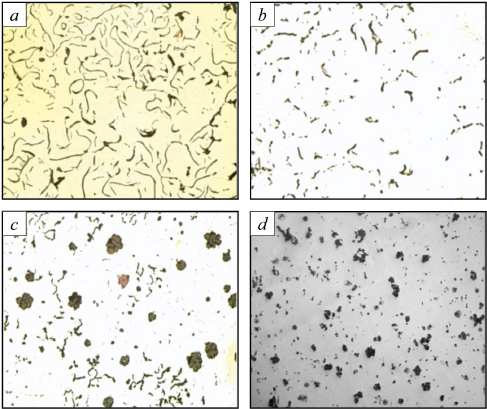
Eutectic cementite inclusions are present in the structure of ductile iron that has not undergone secondary graphitizing modification. However, the growth mechanisms of the graphite–austenite eutectic differ fundamentally between cast irons with nodular and flake graphite morphologies. In gray cast iron, flake graphite acts as the primary growth phase and remains in direct contact with the melt. In contrast, during spheroidal crystallization, graphite inclusions are enveloped by an austenite shell, which markedly retards their growth. As a consequence, ductile iron exhibits a significantly higher tendency toward undercooling. Even at relatively low cooling rates and in alloys with a high carbon equivalent, localized thermal and compositional undercooling may develop within microvolumes, ultimately promoting cementite formation. This behavior is attributed to the isolated growth of nodular graphite and restricted carbon diffusion through the surrounding austenite shell, which together create conditions favorable for metastable crystallization. The graphite microstructures observed in the produced cast irons are shown in Fig. 2.
Fig. 2. Structure of graphite in cast iron treated |
In industrial practice, achieving the required mechanical properties of ductile iron with nodular graphite involves the application of a special high-temperature heat treatment., during which extensive redistribution of structural constituents takes place. This treatment results in the formation of a fine pearlitic structure which, in combination with uniformly distributed spherical graphite inclusions, produces a distinctive combination of mechanical properties. The coexistence of fine lamellar pearlite and isolated graphite spheroids provides an optimal balance between strength and ductility characteristic of high-quality ductile iron, leading to increased tensile and yield strength while maintaining adequate impact toughness and wear resistance [16 – 18].
Overall, the studies conducted confirm the high efficiency of rapidly cooled spheroidizing master alloys in the production of ductile iron with nodular graphite. The principal advantage of this approach lies in the accelerated dissolution of the master alloy, which ensures a higher degree of magnesium recovery – up to 50 – 60 % – during ladle treatment of the liquid melt. This value is significantly higher than that achieved using conventional modifiers, for which magnesium recovery does not exceed 35 – 45 %.
As part of the experimental program, a pilot batch of copper–magnesium master alloy was developed and produced by casting, followed by rapid cooling and subsequent crushing into fractions. Laboratory investigations demonstrated that the addition of rapidly cooled master alloys has a pronounced effect on the chemical composition, microstructure, and service characteristics of high-strength cast iron.
The key technological advantage of the new master alloy is the reduction in the duration of the exothermic reaction by a factor of 1.5 – 2.0. This reduction not only enhances the efficiency of the modification process but also substantially decreases the volume of harmful emissions released into the workshop atmosphere, thereby improving the environmental safety of the technological process.
The influence of rapidly cooled ferroalloys and modifiers on the structure of the final Fe – Al ingot was investigated directly by a research group led by V.P. Ermakova [19 – 21].
At the initial stage of these studies, the authors evaluated the feasibility of modeling the structure of charge materials – such as ferroalloys and modifiers – with the aim of optimizing their subsequent introduction into cast iron and forming a structure that provides enhanced heat resistance. The analysis showed that several technological approaches can be used to create dispersed phases:
– development of alloys with an optimal content of key alloying elements;
– controlled influence on the liquid metal through regulation of the cooling rate;
– selection of appropriate heat-treatment modes for the solid metal [22]. For ferroaluminum, which is a typical representative of ferroalloys, only the first two approaches are applicable, since this class of materials is not subjected to heat treatment. This limitation must therefore be taken into account when developing technological solutions for cast-iron modification.
Subsequent investigations [22 – 24] demonstrated that the structure of charge materials, particularly aluminum-containing ferroalloys, can be purposefully formed by regulating the cooling rate from the liquid state. Experimental results showed that, to obtain an optimal structure of cast iron with increased heat resistance, the ferroalloy should contain 25 – 33 % aluminum. As a continuation of this work [23], the authors formulated the task of developing a methodology for modeling a ferroalloy structure that would be most suitable for subsequent introduction into cast iron in order to achieve the required heat-resistant characteristics. Within the experimental framework, ingots weighing up to 1 kg were produced under laboratory conditions, with aluminum content varied within the specified range. To examine the effect of crystallization conditions on structure formation, three industrially applicable cooling methods were employed: cooling on a steel plate or a water-cooled roller (cooling rate ≈1650 °C/min), casting into a metal mold (360 °C/min), and casting into a sand mold (174 °C/min). This approach made it possible to obtain a comprehensive dataset describing the relationship between microstructure and technological parameters.
Fig. 3 presents the typical structures of alloys cooled from the liquid state at different cooling rates. Microstructural analysis showed that increasing the cooling rate to 1650 °C/min promotes not only refinement of the nonmetallic phase but also the formation of a fine cellular structure [20 – 23].
Fig. 3. Microstructure of Fe – Al alloys cooled at the rate of: |
Based on several additional experimental series, the authors formulated the following conclusions.
Optimization of melt homogenization. Experimental results confirmed that a homogeneous melt state is achieved exclusively when cast iron is alloyed with rapidly cooled ferroaluminum FA30. Under these conditions, homogenization begins at a minimum experimental temperature of 1470 °C, while the homogeneity region is maintained up to 1766 °C. These parameters ensure the formation of a uniform structure in the solid metal. Notably, ingots alloyed with rapidly cooled FA30 exhibit a minimal content of the brittle phase Fe3AlCx , which is responsible for the optimal mechanical properties of the final product [22; 24].
Effect of cooling rate on microcrystalline modifiers. The studies showed that modifiers with a composition of 4.02 – 5.39 % Mg and 49.5 – 51.8 % Si (balance Fe), when subjected to rapid cooling, exhibit a more dispersed and uniform distribution of the primary FeSi2 phase than their slowly cooled counterparts. This microstructural feature ensures a more uniform distribution of alloying elements throughout the metal volume, enhances the stability of the modification process, and improves the reproducibility of processing results [22 – 24].
Dependence of structure on the cooling rate of FS65. It was established that increasing the cooling rate of the FS65 modifier from 12 to 800 °C/min leads to a threefold reduction in the size of silicon-phase inclusions. As a result, the cast-iron microstructure becomes highly homogeneous, fine eutectic grains are formed, and the balance between hardness and strength is improved [19; 24].
Comparison of modifier production technologies. A comparative analysis of cored wires containing 45 % Si and 12 % Ca, produced using different cooling methods, showed that rapidly cooled (chip-type) modifiers increase the tendency of the melt toward undercooling, enhance both the rate and density of nucleation, promote grain refinement, and improve mechanical properties. In contrast, slowly cooled (ingot-type) modifiers exhibit a considerably weaker effect [22; 24].
Taken together, these results confirm the technological advantages of rapid cooling methods in the production of modifying additives for cast iron.
Conclusions
A key factor governing the improvement of alloy service characteristics is control of microstructure through the introduction of specialized charge materials, including ferroalloys, modifiers, and alloying additives. Rapid cooling of melts – at rates up to 105 – 106 K/s – ensures the formation of a fine-grained structure, increases component solubility, and stabilizes metastable phases, effects that cannot be achieved using conventional crystallization methods.
The use of rapidly cooled spheroidizing master alloys – such as Cu – Mg – makes it possible to achieve increased magnesium recovery (50 – 60 % compared with 35 – 45 % for conventional modifiers), reduce the duration of the exothermic reaction by 1.5 – 2.0 times, lower harmful emissions, promote the formation of nodular graphite in cast iron, and improve mechanical properties, including hardness and strength.
An increase in the cooling rate of ferroalloys and modifiers – for example, FS65 from 12 to 800 °C/min – results in a threefold reduction in the size of silicon-phase inclusions, increased microstructural homogeneity, grain refinement, and improved strength characteristics of the final product.
For ferroaluminum containing 25 – 33 % Al, the optimal structure is achieved at cooling rates of 1650 °C/min (plate or roller cooling), which ensures a minimal content of brittle phases such as Fe3AlCx . Rapidly cooled modifiers (chip-type) exhibit higher efficiency than ingot-type modifiers, as they enhance nucleation and promote grain refinement.
Thus, the use of rapidly cooled charge materials in combination with controlled regulation of the cooling rate opens new possibilities for producing alloys with tailored properties. This approach is particularly relevant for high-strength cast iron, heat-resistant steels, and specialized master alloys. At the same time, these methods combine technological efficiency with environmental safety, making them promising for industrial implementation.
1. Men’shikova S.G., Brazhkin V.V. Effect of extreme impacts on structure and properties of A-PM-RZM alloys (including high-entropy alloys) during rapid cooling of their melts. Fizika kondensirovannykh sostoyanii. 2023;(3):141–141. (In Russ.). https://doi.org/10.26201/ISSP.2023/FKS-3.138
2. Men’shikova S.G., Zhuikova A.S. Influence of high pressure on structure and properties of the Al90Gd10 alloy produced by rapid melt quenching. In: Physics of Condensed Matter. Proceedings of the III Int. Conf. dedicated to the 60th Anniversary of the Institute of Solid State Physics, Russian Academy of Sciences. May 29 – June 3, 2023. Chernogolovka:142. (In Russ.).
3. Menshikova S.G. Viscosity and solidification of Al100–хCuх (х = 5, 10, 17, 25 at.%) melts. Khimicheskaya fizika i mezoskopiya. 2022;24(3):377–387. (In Russ.). https://doi.org/10.15350/17270529.2022.3.31
4. Menshikova S.G., Shushkov A.A., Brazhkin V.V. Microstructure and physical and mechanical properties of the Al90Gd10 binary alloy after barothermal treatment. Physics of the Solid Statе. 2022;64(4):204–209. https://doi.org/10.1134/S1063783422050055
5. Men’shikova S.G., Afkalikova V.Yu. In-situ experimental study of the local structure and rapid solidification of liquid alloys in the Al–Y binary system. In: Proceedings of the VI Conf. on Small-Angle Scattering and Reflectometry. June 21–23, 2023, Gatchina. PIYaF; 2023:32. (In Russ.).
6. Menshikova S.G., Shirinkina I.G., Brodova I.G., Lad’yanov V.I., Suslov A.A. A study of the structure and properties of aluminum alloys with copper produced under superfast cooling of melt. Metallovedenie i termicheskaya obrabotka metallov. 2018;(3(753)):45–52. (In Russ.).
7. Men’shikova S.G., Shirinkina I.G., Brodova I.G., Lad’yanov V.I., Suslov A.A. Structure of thin ribbons from an Al – Co alloy under flash cooling. Metallovedenie i termicheskaya obrabotka metallov. 2016;7(733):13–20. (In Russ.).
8. Hladcouski V.I., Kushner T.L., Pinchuk A.I., Shepelevich V.G., Shilko V.M. Grain structure and mechanical properties of fast-hardned foils of Al-7 alloy wt.% Bi obtained by spinning. Vestnik of Brest State Technical. 2024;(2(134)):104–107. (In Russ.). https://doi.org/10.36773/1818-1112-2024-134-2-104-107
9. Hladkouski V.I., Kushner T.L., Maksimov Yu.V., Pinchook А.I., Shepelevich V.G. Microstructure of rapidly solidified alloy Al-1.5 wt.% Pb. Vestnik of Brest State Technical University. 2024;(3(135)):81–84. (In Russ.). https://doi.org/10.36773/1818-1112-2024-135-3-81-84
10. Cottrell A.H. The Structure of Metals and Alloys. London: Arnold; 1957.
11. Nikitin V.I. Study of charge material heredity application to improve casting quality. Liteinoe proizvodstvo.1985;(6):20–21. (In Russ.).
12. Nikitin V.I. Patterns and mechanisms of structural inheritance in the charge-melt-casting system. Nasledstvennost’ v litykh splavakh. 1990;(1):1–7. (In Russ.).
13. Kalinichenko A.S., Slutsky A.G., Sheinert V.A., Trubitsky R.E., Stefanovich V.A., Smyetkin V.A. Features of spheroidizing modification of high-strength cast iron with master alloys based on copper. Foundry Production and Metallurgy. 2016;(2(83)):110–115. (In Russ.).
14. Slutsky A.G., Sheynert V.A., Kulinich I.L., Huletski N.A., Fedorovich D.S. Peculiarities of obtaining cast iron with increased strength nodular graphite. In: Metallurgy: Republican Interdepartmental Collection of Sci. Works. 2023;43:125–133. (In Russ.).
15. Slutskii A.G., Dolgii L.P., Kulinich I.L., Kotkov A.V., Ivanov A.I., Bychik A.V., Danilova A.I. Application of copper-based spheroidizing master alloy in the production of high-strength cast iron. In: Metallurgy: Republican Interdepartmental Collection of Sci. Works. 2019;40:62–67. (In Russ.).
16. Kalinichenko A.S. Use of copper-based “chip” spheroidizing master alloy containing yttrium oxide nanoparticles for high-strength cast iron. Foundry Production and Metallurgy. 2016;(1(82)):130–135. (In Russ.).
17. Slutsky A.G., Kulinich I.L., Sheinert V.A., Stefanovich V.A., Trubitsky R.E., Kotkov A.V. Technological pecularities of producing cast iron with spherical graphite using a fast-cooled copper-magnesium ligature. Foundry Production and Metallurgy. 2020;(2):15–21. (In Russ.). https://doi.org/10.21122/1683-6065-2020-2-15-21
18. Dolgii L.P., Dovnar G.V., Kalinichenko V.A., Kalinichenko M.L. Technologies of using dispersed rapidly solidified materials in foundry production. In: Advanced Materials and Technologies: Powder Metallurgy, Composite Materials, Protective Coatings, Welding – Proceedings of the 14th Int. Sci. and Technical Conf. dedicated to the 60th Anniversary of Powder Metallurgy in Belarus. Minsk: Belorusskaya nauka; 2020:136–140. (In Russ.).
19. Sheshukov O.Yu., Ermakova V.P., Smirnova V.G., Kataev V.V., Marshuk L.A., Konashkov V.V., Shubin A.B., Ovchinnikova L.A., Vyaznikova E.A., Nekrasov I.V., Lapin M.V., Tsepelev V.S. Controlling the structure formation of Fe-C alloys using ferroalloys and modifiers produced by different methods. In: Physical Chemistry and Technology in Metallurgy: Collected Works – Selivanov E.N. & Dolmatov A.V. (Eds.). Chelyabinsk: Yuzhno-Ural’skoe knizhnoe izdatel’stvo; 2015:281–293. (In Russ.).
20. Ermakova V.P., Sheshukov O.Yu., Marshuk L.A. Effect of composition and cooling rates of liquid metal on the structure of FeAl system alloys. Metallovedenie i termicheskaya obrabotka metallov. 2010;(8):3–7. (In Russ.).
21. Ermakova V.P., Smirnova V.G., Kataev V.V., Sheshukov O.Yu., Konashkov V.V., Ovchinnikova L.A., Marshuk L.A. Effect of aluminum-containing additives on the homogeneity of melt and structure of cast aluminum iron. Metallovedenie i termicheskaya obrabotka metallov. 2014;(3(705)):7–11. (In Russ.).
22. Smirnova V.G., Vyaznikova E.A., Ovchinnikova L.A. Microstructure and chemical composition of phases in a magnesium-containing modifier produced at different cooling rates. Elektrometallurgiya. 2009;(4):33–36. (In Russ.).
23. Sheshukov O.Yu., Ermakova V.P., Marshuk L.A., Smirnova V.G., Kataev V.V. To the question of increasing the heat resistance of materials. Izvestiya Samarskogo nauchnogo tsentra Rossiiskoi akademii nauk. 2012;14(1–2): 593–596. (In Russ.).
24. Sheshukov O.Yu., Ermakova V.P., Marshuk L.A., Kudinov D.Z. Modifier structure and cast iron properties. Innovatsii v materialovedenii i metallurgii. 2012;2:186–195. (In Russ.).
Daniil A. Lobanov, Cand. Sci. (Eng.), Senior Researcher
101 Amundsena Str., Yekaterinburg 620016, Russian Federation
Oleg Yu. Sheshukov, Dr. Sci. (Eng.), Prof., Director of the Institute of New Materials and Technologies, Ural Federal University named after the first President of Russia B.N. Yeltsin; Chief Researcher of the Laboratory of Powder, Composite and Nano-Materials, Vatolin Institute of Metallurgy of the Ural Branch of the Russian Academy of Sciences
101 Amundsena Str., Yekaterinburg 620016, Russian Federation
19 Mira Str., Yekaterinburg 620002, Russian Federation
Petr S. Yablokov, Engineer
101 Amundsena Str., Yekaterinburg 620016, Russian Federation
Lobanov D.A., Sheshukov O.Yu., Yablokov P.S. Modern trends in application of rapidly cooled charge materials for modifying cast iron. Izvestiya. Ferrous Metallurgy. 2026;69(1):51-58. https://doi.org/10.17073/0368-0797-2026-1-51-58
 Email this article (Login required)
Email the author (Login required)
Email this article (Login required)
Email the author (Login required) Publishing House of National University of Science and Technology "MISIS"
4, Leninskii prospekt, Moscow, 119991, Russia
Phone: +7 (495) 638-44-11, +7 (495) 784-58-66
E-mail: fermet.misis@mail.ru